How Germany Stopped Lionel Messi And Argentina In 2014 World Cup Final. A Lesson For Spain
There aren't many teams that can claim to have successfully stopped Lionel Messi. As Spain take on Argentina in the FIFA World Cup 2026 final, we take a look at the model that last stopped Messi.
 © Getty
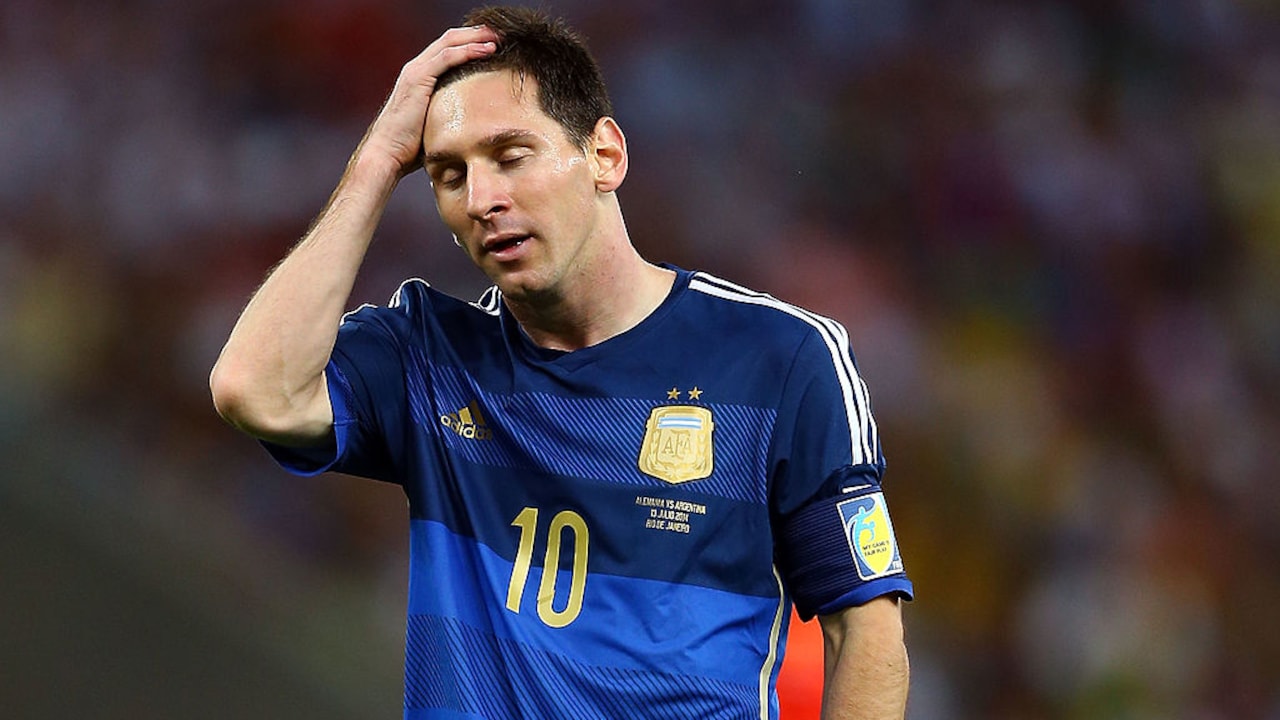
Lionel Messi is widely considered a footballing wizard, a man capable of not just scoring goals from the most improbable situations but also unlocking the tightest defences with his impeccable passing vision. For over two decades, managers have struggled to contain him; some even gave up while trying to answer one question: How do you stop him? While there aren't many who can claim to have succeeded in stopping the Argentine magician, former Germany manager Joachim Loew's 2014 World Cup final strategy acts as the ideal blueprint for coaches to devise a plan that can be used to neutralise the Messi threat. The execution of the strategy, however, is totally up to the coaches setting up their teams.
Most teams make the mistake of assigning one player to follow Messi everywhere on the pitch, a tactic known as man-marking. The problem? Messi is too clever. He will simply drag his marker out of position, creating huge gaps for his teammates to exploit.
Germany, in the 2014 World Cup final, did not man-mark Messi. Instead, they built a moving "zonal cage" around him. Whenever Messi entered a specific zone on the pitch, the closest German player closed him down immediately. Simultaneously, two or three other players moved in to cut off his passing lanes. Rather than chasing him, they passed him over to the next defender, as if Messi were the baton in a relay race being handed from one German player to another. Messi found himself constantly surrounded by a shifting wall of German shirts, suffocating his space before he could even turn.
For Messi to fully unleash his powers, it is important that he receives the ball in the "number 10 pocket", either centrally or on the right side of the pitch. This is where Bastian Schweinsteiger did an excellent job for Germany in the 2014 World Cup final in Rio. Playing the game of his life, the German midfielder acted as a human shield in front of the back four. His sole mission was to disrupt the supply line.
By constantly tracking back, tackling fiercely, and blocking the passing lanes from Argentina's deeper midfielders, Schweinsteiger ensured the ball rarely reached Messi in dangerous areas. When Messi did get the ball, Schweinsteiger was instantly there to make it a physical battle, refusing to let the Argentina captain breathe easily even for a second.
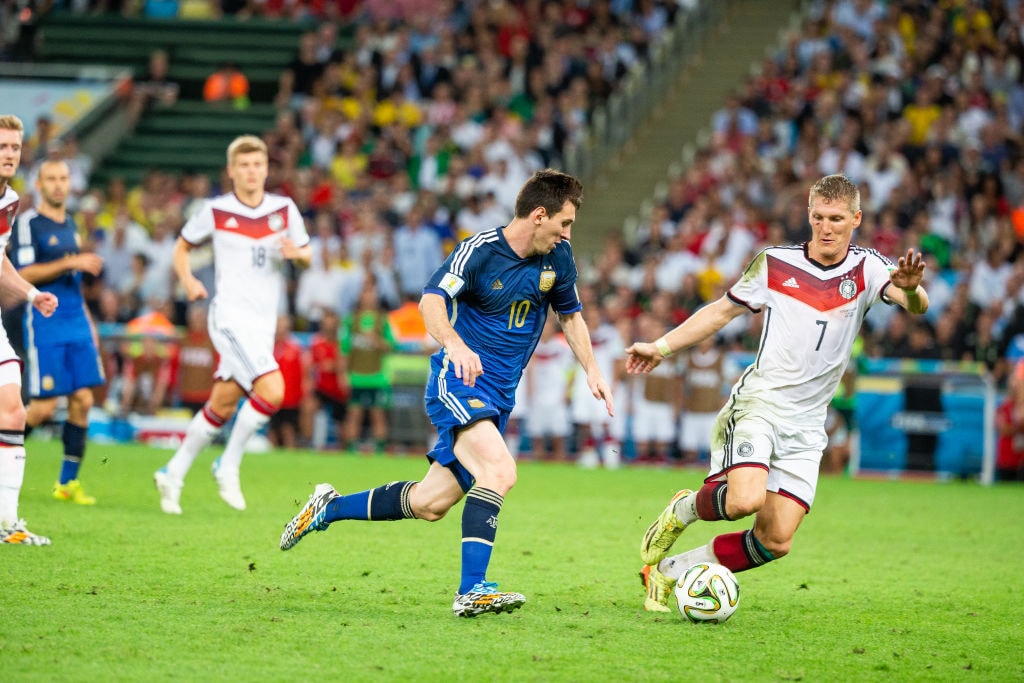
It is no secret that Messi's left foot is responsible for most of his magic. When he cuts inside from the right wing onto his left, he is practically unstoppable. Germany, hence, deployed a centre-back in the form of Benedikt Howedes in the left-back role, alongside centre-back Mats Hummels, to keep their defensive form and discipline near-perfect.
They deliberately angled their bodies to show Messi down the outside (towards the touchline) rather than letting him cut inside. By forcing him onto his weaker right foot and driving him into crowded wide areas, they took away his favourite shooting and crossing angles.
Rodri: Spain's Key to Stopping Messi
Stopping Messi requires absolute collective discipline. Germany did not panic when he got the ball. They remained patient, kept their defensive shape, and relied on communication. Schweinsteiger was pivotal in blocking the supply to and from Messi. For Spain, it is their captain, Rodri, who has to play the same role in the 2026 World Cup final in New York.
By starving him of service, crowding his favourite zones, and forcing him away from the centre of the pitch, Germany proved that even the greatest player in the world can be contained if a team defends as one cohesive unit. Rodri has been doing the same for Spain throughout the entire tournament, but his task does become a little more challenging against Messi.
Messi operates brilliantly in the half-spaces and the pockets of room between Spain's midfield and defensive lines. As the world's premier defensive midfielder, Rodri's primary responsibility will be sniffing out these vertical passing lanes before the ball ever reaches Messi. His elite positional awareness allows him to shield the back four without being dragged out of position by Argentina's decoy runners.
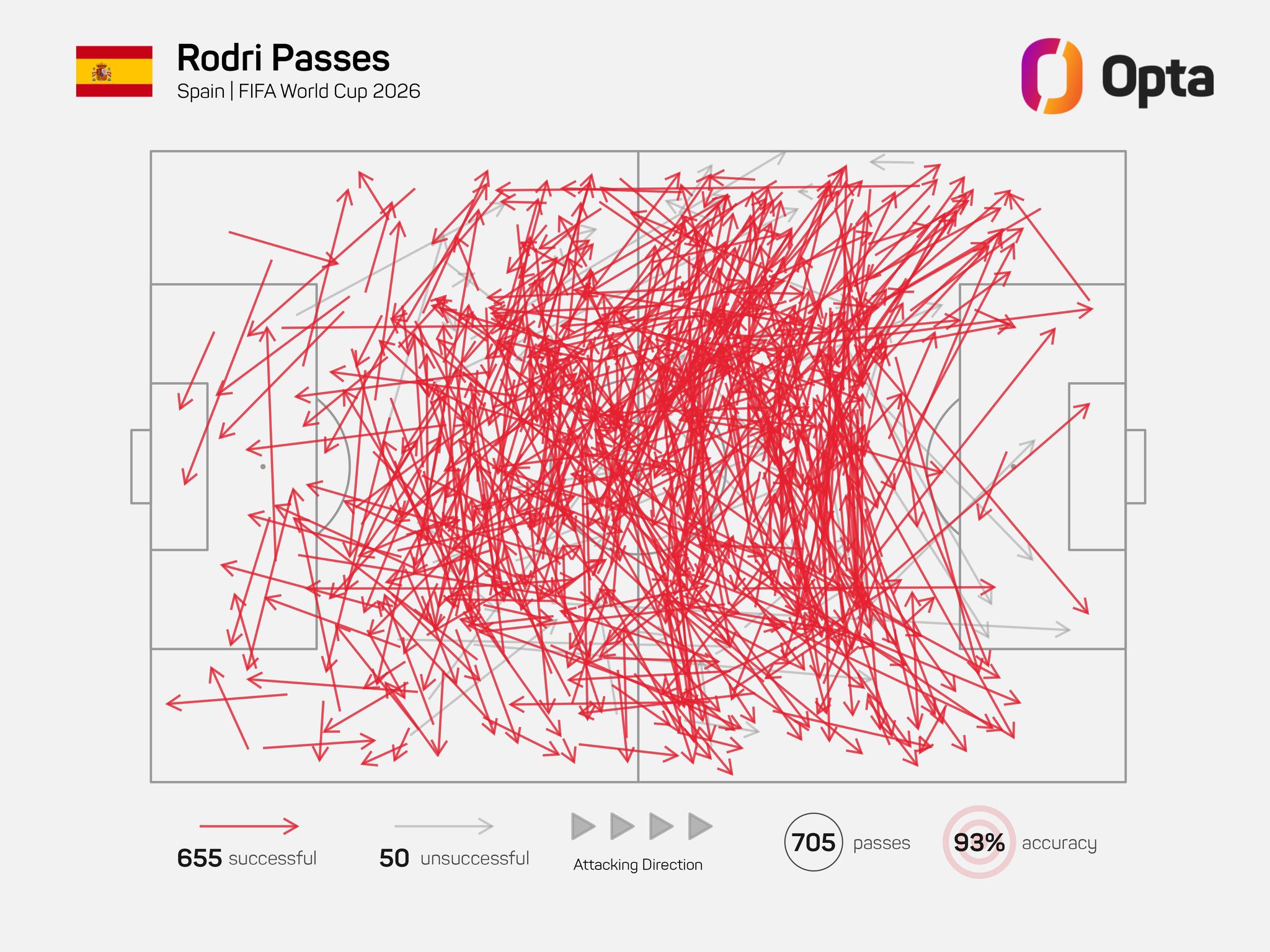
For Rodri, who has the most completed passes in a single World Cup edition, it isn't only about cutting the supply to Messi but also about taking control of Spain's midfield. The more control he helps his team establish, the less effective Messi automatically becomes.
Argentina are lethal when winning the ball back quickly and instantly looking for Messi to transition into attack. Rodri acts as Spain's structural insurance policy. His ability to execute tactical fouls, press intelligently, and win physical duels stops counter-attacks in their infancy. Heading into the final, Rodri himself highlighted the expectation of a heavily physical battle, acknowledging that managing Argentina's intense competitive spirit will be crucial to staying in control.
The most effective way to stop Messi is simple: don't let him have the ball. Rodri is the absolute master of tempo and rhythm. By recycling possession cleanly, as shown by his near-perfect passing display in the semi-final against France, he keeps Spain in total command of the game. Forcing Messi to drop deep into his own half just to get a touch severely limits his capacity to inflict damage in the final third.
If Spain do end up executing this plan to perfection, expect other Argentina players, especially Rodrigo De Paul, to try and rattle Rodri and the others surrounding Messi with physical confrontations. This is when Spain have to maintain their composure. If they do, the battle will most likely be won.