For Indian Sport, 2026 Should Be A Year To Prove Our Systems And Not Just Our Ambition
For Indian sport, 2026 should feel like a year of consolidation and conversion. We have already shown that we can produce world-class performances in pockets. The next step is consistency
 © AFP
© AFP
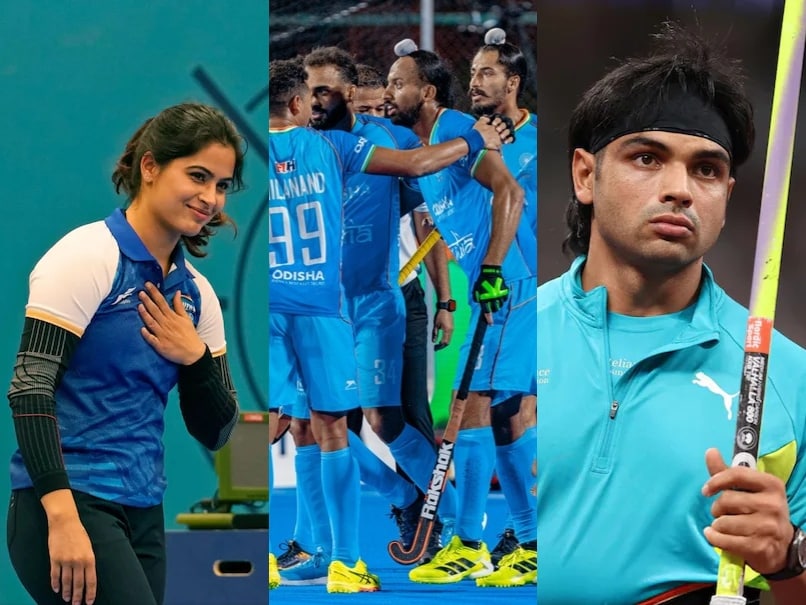
When I look at 2026, I see a year that will tell us a lot about how far Indian sport has truly come - not just in talent, but in planning. It is a year where the calendar itself becomes a test. Two big multi-sport events, the Commonwealth Games and the Asian Games, will fall in the same season, and that creates pressure in the right places. It forces federations, coaches, support staff, and athletes to think beyond one good week and build programmes that can hold shape across months.
For Indian sport, 2026 should feel like a year of consolidation and conversion. We have already shown that we can produce world-class performances in pockets. The next step is consistency. That means selection clarity, predictable competition exposure, injury prevention, recovery systems, and a domestic calendar that genuinely prepares athletes for international intensity. If we get those basics right, 2026 can be the year when India does not just turn up strong, but turns up organised.
The Commonwealth Games and the Asian Games will bring two different kinds of motivation. The Commonwealth Games typically reward execution, composure, and depth in key sports where medals are decided by small margins. The Asian Games, meanwhile, are closer to Olympic-level density in many disciplines, and they expose whether your second- and third-line athletes are truly of international standard. Put together, these two events can sharpen our focus for the longer runway towards Los Angeles 2028.
Shooting is a big part of that story in 2026. It is a sport where India already has pedigree, and expectations will naturally be high. What I will be watching is whether we convert that pedigree into repeatable performances across multiple events, not just one or two standout athletes. Shooting is brutally honest. If your selection process is not transparent, if your domestic circuit is not competitive enough, or if athletes are not getting the right international match exposure, it shows up immediately on the scoreboard. The good news is that shooting responds well to disciplined systems. If we keep coaching stability, invest in sports science and mental conditioning, and build pressure situations into our training calendar, 2026 can be a year where we see real depth, including younger shooters pushing into finals consistently. Shooting also represents professionalism. The margins are tiny, and performance comes from process, not hype. If we want Indian sport to mature, shooting is one of the best templates.
Beyond shooting, I expect a few sports to rise in a very logical way. Athletics should continue to grow, not just through one star, but through better depth across sprints, jumps, and throws, because more athletes are training with modern strength and conditioning and competing abroad earlier. Boxing also has the potential to surge if we protect the athlete pathway and keep the coaching environment stable, because boxing responds quickly to structured investment and strong international competition. In weight-category sports like wrestling, boxing, and weightlifting, the differentiator in 2026 will be sports science, recovery, and competition planning. The talent is there, but the body has to last the whole cycle.
I would add squash to that list as well, especially after the recent performances that have brought the sport back into sharper focus. Squash builds athletes who can handle sustained pressure. It is physically demanding, tactically complex, and it rewards mental toughness. If India backs it with structured support, regular international exposure, and a deeper domestic circuit, 2026 can be a year where we see not just isolated wins, but a stronger pipeline pushing into the latter stages of major events. It can also grow commercially because it is fast, intense, and very watchable when presented well.
I also expect swimming and track cycling to keep pushing forward, provided we treat them as long-term projects and not quick medal hunts. In these sports, infrastructure matters, but what matters even more is time in the system, daily monitoring, and exposure to the right level of racing. If we stay patient and disciplined, the payoff can come faster than people think.
Internationally, 2026 will continue the trend towards formats that are faster, more watchable, and easier to follow. That will influence India too. Shorter formats, mixed events, team-based competitions, and strong storytelling are not just entertainment choices; they are growth engines. They attract sponsors, bring younger fans, and give athletes a bigger stage. Our opportunity is to marry that modern presentation with serious high-performance culture, so the ecosystem grows without becoming noisy or superficial.
My overall projection is positive. I believe 2026 can bring stronger professionalism into Indian sport, more accountability in preparation, and better alignment between federations, athletes, and stakeholders. If we treat it as a year to prove our systems and not just our ambition, it can become a turning point - not only in medals, but in how reliably India produces them.
Gagan Narang is an Olympic medallist in shooting. He is also an Asian Games and Commonwealth Games medallist